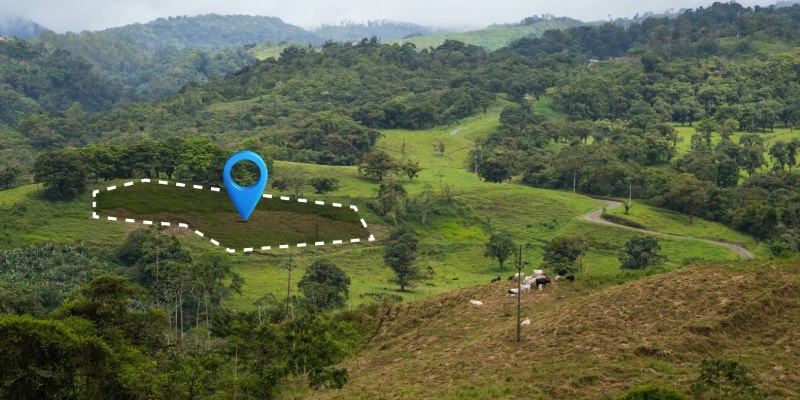
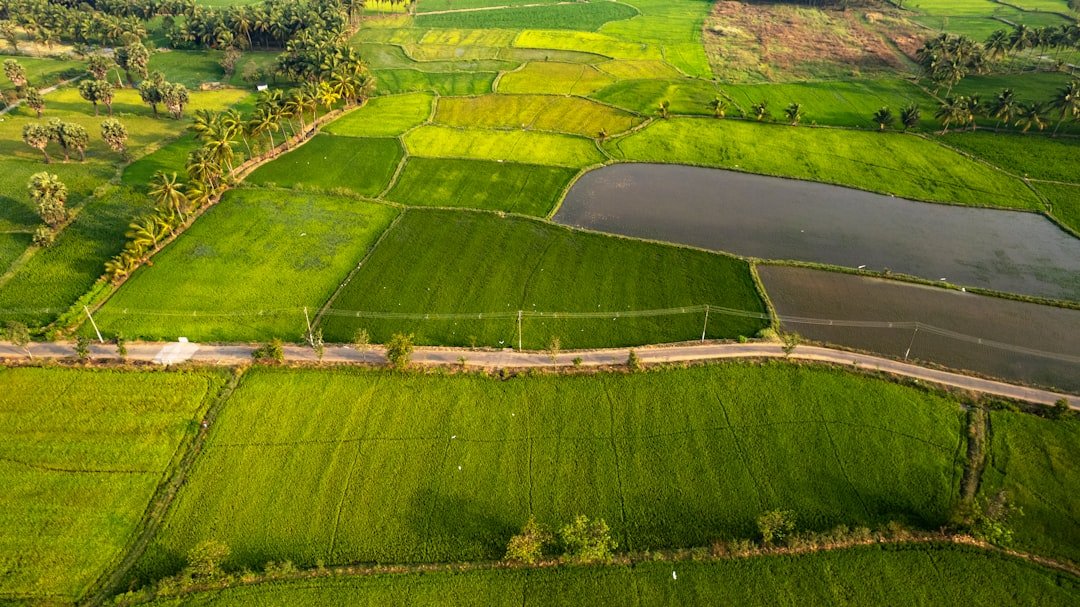
The search for farm land for sale in Bangalore has fundamentally changed. Five years ago, buyers focused almost entirely on the Karnataka side of the city’s southern belt. Today, the most informed investors are plotting a different course — one that stretches down through Hosur and into the Denkanikottai hills of Tamil Nadu, where prices are lower, soil is richer, and long-term appreciation is quietly gaining momentum. This guide maps every key corridor, gives you honest per-acre pricing, and explains exactly what drives the market right now.
The Bangalore Farmland Boom: What’s Driving Demand in 2026
Three converging forces are pushing farmland demand to new heights: a growing weekend-farmhouse culture among Bangalore’s IT workforce, a maturing managed farmland industry that removes the operational burden of ownership, and a wave of infrastructure investment across the southern corridor.
Weekend Farmhouse Culture: As the city continues to grow, people are craving open spaces free from traffic and concrete. Farmland provides tranquility, green cover, and a source of predictable income. Most buyers today use farmland for weekend farming, organic food production, building a farmhouse, or as a long-term investment. The remote-work shift has amplified this: working professionals — especially those in tech and creative fields — increasingly prefer retreating to a greener, quieter setting.
Managed Farmland Growth: Managed farmland around Bangalore has moved from a curiosity to a clear weekend-home-plus-nature-living category. Buyers want land that feels rural yet works like a well-run community — transparent paperwork, water security, basic amenities that actually get delivered, and a management team that handles crop, labor, and upkeep without drama.
Infrastructure Development: Hosur is experiencing a once-in-a-generation infrastructure boom. The Bangalore–Chennai Expressway opening in 2026 is a definitive game-changer. Combined with SIPCOT expansion, IT park development, and improved utilities, Hosur is positioned for strong growth. Wider roads, better state highway connectivity, and proximity to Electronic City all continue to push buyer demand southward along the corridor. According to industry estimates, the agricultural land sales market has grown at a CAGR of 8–10% over the last five years, with the post-pandemic era seeing a renewed interest in self-sustainable lifestyles, agro-tourism, and organic farming ventures.
Farm Land Prices Across Bangalore Corridors: The 2026 Map

Prices vary dramatically depending on which side of the border you buy and how far you travel from Electronic City. Here is a clear picture of where the market stands today across each key belt.
| Location / Belt | Distance from Bangalore | Price Range (Per Acre) | Key Characteristics | Best Suited For |
|---|---|---|---|---|
| Anekal & Agalakotta (Karnataka) | 25–35 km | ₹1 Cr – ₹2 Cr | Closest to Electronic City & Outer Ring Road; high urban spillover demand | Capital appreciation, premium plots |
| Hosur Town Outskirts (Tamil Nadu) | 35–50 km | ₹45 L – ₹90 L | Industrial hub, strong road network, SIPCOT proximity, rapidly urbanising | Investors seeking growth with infrastructure tailwind |
| Hosur–Denkanikottai Road Belt (Tamil Nadu) | 55–70 km | ₹30 L – ₹65 L | Fertile red soil, good borewell water, scenic hill views, clear titles available | Managed farmland, weekend farmhouses |
| Denkanikottai & Thalli (Tamil Nadu) | 65–85 km | ₹35 L – ₹80 L | Cooler climate, forest-adjacent, mango & vegetable cultivation, growing resort community | Lifestyle investment, eco-tourism, managed farming |
| Anchetty–Bargur Fringe (Tamil Nadu) | 70–100 km | ₹15 L – ₹30 L | Remote, dense forest proximity, lower development; raw land value play | Long-horizon land banking only |
Farmland prices in and around Bangalore vary significantly. The cost is determined by distance from the city, ease of accessibility, soil quality, and the level of development of the land. Buyers are now preferring regions close to the Karnataka–Tamil Nadu border since land is cheaper and there is more green cover, clean air, pleasant weather, and easy road access to Bangalore.
Why Smart Buyers Are Looking South: The Denkanikottai Advantage
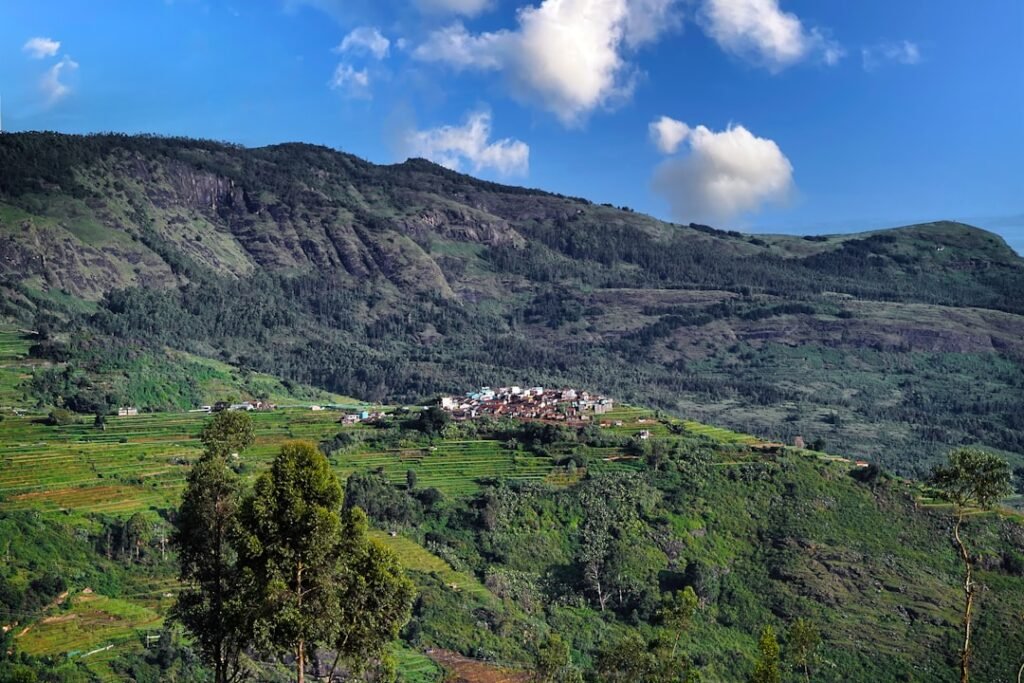
Denkanikottai is no longer a secret among serious farmland investors. It offers a rare combination: lower entry cost than Anekal or Hosur, meaningfully better soil and water conditions, a cooler microclimate, and enough proximity to Electronic City to make weekend visits genuinely easy.
Lower Entry Price, Higher Appreciation Potential
Denkanikottai is one of the most preferred farmland zones for Bangalore buyers. Located in Tamil Nadu but very close to Electronic City, it offers breathtaking landscapes, cooler temperatures, and fertile soil. Land here is still affordable compared to Bangalore outskirts, with prices beginning at ₹35 lakh to ₹60 lakh per acre depending on the village and level of development.
That affordability gap is what creates the appreciation runway. Denkanikottai has become popular due to better roads, upcoming resorts, and farm communities, which is steadily pushing prices upward. The same trajectory played out in Anekal a decade ago — buyers who entered early when it felt “too far” saw the best returns.
Better Soil and Water Availability
Areas such as Denkanikottai and Thally are well endowed with soil and water, which is very good for organic farming. The region’s red laterite soil supports mango orchards, vegetable cultivation, and intercropping models that generate year-round agricultural income — which is precisely what managed farmland operators look for when scouting land. Denkanikottai is known for its fertile land and is well suited for mango farms and vegetable cultivation.
Proximity to Bangalore Without the Premium
Projects along the state highway linking this corridor can be reached in about 40 minutes from Electronic City via the Electronic City Elevated Expressway and NICE Corridor. The area is popularly known as the “Little England of South India” due to its pleasant weather — temperatures can drop as low as 10°C during winters and rarely exceed 30°C in summer. For an Indiranagar or HSR Layout professional driving down on a Friday evening, that combination of drivability and climate is a powerful draw.
If you’re actively searching in this belt and want to see verified, ready-to-register plots, the team at SanjeevaniFarms can walk you through our GreenVista managed farmland project in Thalli, Tamil Nadu — a luxury community designed specifically for buyers who want nature, privacy, and modern amenities without the stress of independent land ownership.
Karnataka vs Tamil Nadu Farmland: Legal and Tax Differences
The state border between Karnataka and Tamil Nadu is not just a line on a map — it represents two meaningfully different regulatory environments for farmland buyers. Understanding the distinction upfront saves significant time and prevents costly mistakes.
Who Can Buy: The Core Difference
Tamil Nadu has always had relatively relaxed laws regarding agricultural land. Any Indian citizen — including non-agriculturists — can purchase agricultural land up to a maximum limit of 59.95 acres. This makes Tamil Nadu farmland significantly more accessible for the typical Bangalore IT professional or business owner who has no agricultural background.
Karnataka’s framework is more layered. Prior to 2020, Section 79A and 79B of the Karnataka Land Reforms Act strictly prohibited non-agriculturists and those with non-agricultural income over ₹25 lakhs from buying farmland. As per new rules established in 2020, Karnataka now allows any individual to buy land, even from a non-agriculturist background. Indian residents, institutions, and academic and corporate establishments can now more easily buy and sell land in Karnataka. However, Tamil Nadu can be slightly stricter in practice in some districts, where buyers may be required to submit an affidavit stating agricultural intent and may face more detailed DC approval processes.
NRI Buyers: Important Restriction
Under FEMA guidelines, Non-Resident Indians (NRIs) and Overseas Citizens of India (OCIs) cannot directly purchase agricultural land, plantation property, or farmhouses in India. However, they can inherit such property or purchase it if they become resident Indians. NRIs must route investments through relatives, Indian entities, or managed farmland companies. Managed farmland structures — where an Indian registered company holds and operates the land on behalf of investors — are the most practical path for NRI buyers seeking exposure to this asset class.
Key Documents: What Differs by State
Regardless of which state you buy in, clear documentation is non-negotiable. At minimum, verify the Title Deed (which must show an unbroken 30-year chain of ownership) and the Encumbrance Certificate (EC), which confirms no mortgages or court attachments — get a 30-year EC.
The revenue documents differ by state. In Karnataka, the key document is the RTC/Pahani (Record of Rights, Tenancy and Crops), while Tamil Nadu uses the Patta, Chitta, and Adangal — revenue records issued by the Village Accountant or Tahsildar that contain details of land area, owners, crop details, and tenancy.
On tax treatment: no GST applies to the sale of agricultural land, as these are not classified as goods or services per GST norms. Income from agricultural sources such as cultivation and harvesting is also exempt from income tax. This tax-free agricultural income is one of the most underappreciated financial benefits of farmland ownership for high-income urban professionals. For a deeper look at how to navigate the Karnataka purchase process specifically, our guide on how to purchase agricultural land in Karnataka walks through every step in detail.
Managed Farmland Projects: Hassle-Free Ownership for Busy Professionals
The biggest barrier to farmland ownership has never been money — it’s been management. Most urban buyers discover this within six months of buying raw land. Finding reliable labour, securing water, fencing the boundary, deciding what to grow, and navigating local municipality issues can quickly turn a peaceful investment into a full-time job. Managed farmland solves this entirely.
Managed farm plots are becoming a popular choice for people who want to own farmland without the hassle of managing it themselves. Instead of handling cultivation, labour, irrigation, and security independently, buyers get professionally developed and maintained farmland along with plantations, basic infrastructure, and weekend-stay amenities.
What a Good Managed Farmland Project Delivers
Across branded operators near Bangalore, the common buy-in band currently sits roughly between ₹35 and ₹60 lakh per acre, with corridor-led variance. Smaller formats like 5 to 10 guntas are priced as ticket sizes rather than simple area multiples, especially when bundled with plantation and amenity access. Quarter-acre branded offerings can feel more expensive on a per-acre basis because you are paying for community infrastructure, landscaping, and hand-holding that individual farms do not provide.
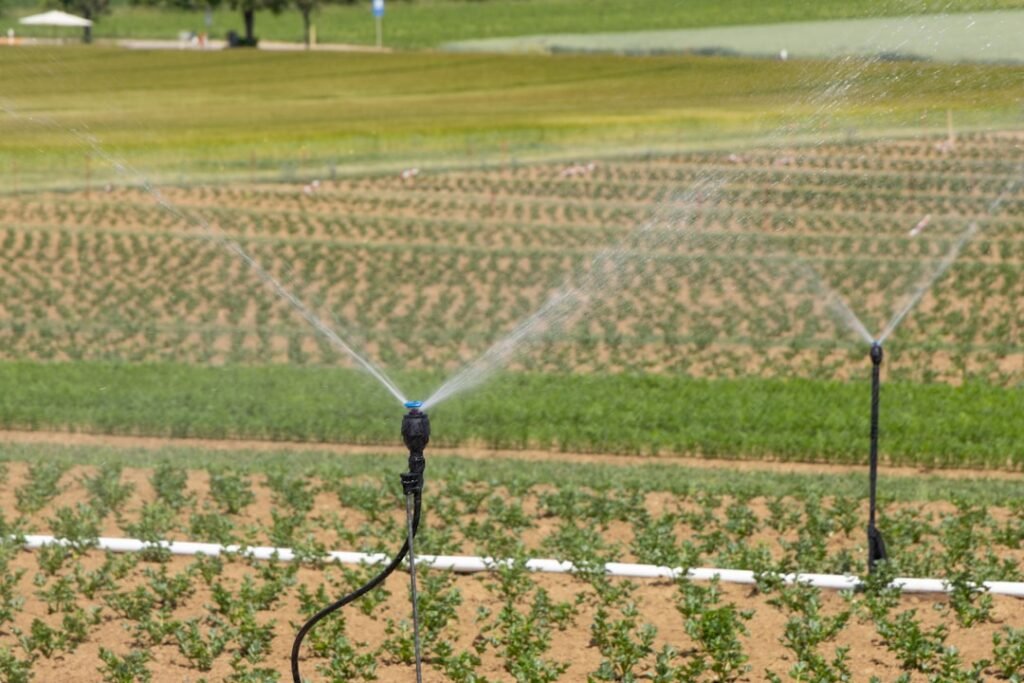
A well-run project should cover: legal title verification with individual registration in your name; borewell infrastructure and drip irrigation; regular crop management with monthly reporting; 24/7 security and perimeter fencing; and optional farmhouse construction support. The best operators apply advanced equipment, drip irrigation systems, and precision farming techniques to maximise yield, conserve water, and ensure efficient use of resources — keeping you fully informed through monthly reports, photographs, and videos, and creating customised farming plans whether your interest is in fruit orchards, hardwood timber, cash crops, or mixed farming.
At SanjeevaniFarms, our managed farmland projects — including SilverWoods and Tapovan near Bangalore, and GreenVista in Thalli — are fully developed with clear titles and ready for registration. Our team handles everything from soil preparation to harvest, while you enjoy full legal ownership and the freedom to visit your green sanctuary whenever you choose.
5-Year Appreciation Analysis: Which Locations Delivered the Best Returns?

Numbers matter when making a decision of this scale. Here is an honest picture of what appreciation has looked like across the corridor over the past three to five years, and what the underlying drivers tell us about the next five.
Corridor-Level Returns: 2021–2026
Farmlands around Hosur, Thally, and Anekal have shown annual price appreciation of 10–15%. When you combine farming income or a managed farm programme, the overall return on investment can reach 17–23% per year — a figure that is stable and sustainable rather than speculative.
Agricultural land prices have risen by 10–14% CAGR in peri-urban areas like Hosur, Thalli, and the outskirts of Bangalore. Land prices in Hosur and Thalli rose approximately 25% between 2022 and 2024 alone. That is not uniform — micro-location within the corridor matters significantly. Land near confirmed infrastructure projects (road widening, SIPCOT zones, upcoming airport connectivity) has outpaced land in similar but less well-connected villages.
Bangalore’s metropolitan area has expanded rapidly along radial corridors, converting vast tracts of agricultural land into mixed-use zones. This pattern has created a scarcity of fertile, legally clear farmland within accessible distance from the city, causing prices in peripheral zones to appreciate steadily.
The Denkanikottai Opportunity Window
Denkanikottai is where Hosur was approximately seven to eight years ago — still affordable, already on the radar of well-informed buyers, and standing to benefit disproportionately as infrastructure investment closes the gap. The southern belt running through Hosur, Denkanikottai, Thally, and Anekal is emerging as a hotspot for farmland. Reasons include a good climate ideal for organic farming and weekend houses, a strong road network to Electronic City and other major IT parks, infrastructure development in the form of schools, resorts, and industries, and lower rates relative to central Bangalore land prices.
What Drives Appreciation Here — and What to Watch
Three factors have been the consistent drivers across the corridor: first, location advantage — regions such as Anekal and Hosur are developing due to industry and good road connectivity to Bangalore; second, connectivity and infrastructure — new highways and metro lines to Attibele, Chandapura, and Sarjapur increase land demand. Third, development potential — areas that could become residential or eco-tourism sites in the near future naturally gain value over time.
The honest caveat: not all land in this corridor will appreciate equally. Legally compliant farmland investment near Bangalore provides not only peace of mind but also liquidity at resale. Properties with clean titles, traceable documentation, and environmental compliance attract higher investor trust and institutional interest. In the current market, where transparency influences valuation, rigorous legal due diligence is no longer optional — it is a direct determinant of long-term capital appreciation.
Land with ambiguous title chains, disputed survey boundaries, or proximity to eco-sensitive zones will not participate in the same appreciation curve. The premium for legally clean, well-managed plots is not just peace of mind — it is a measurable price difference at resale.
Frequently Asked Questions
We’ve compiled answers to the questions buyers most commonly ask before making their decision. See below for our detailed FAQ.
Explore Available Farm Lands — Book Your Site Visit
The Bangalore–Hosur–Denkanikottai corridor is one of the most compelling farmland investment regions in South India right now — and the window to enter at current prices is narrowing as more buyers wake up to this opportunity. Whether you are a Bangalore-based professional looking for a green weekend retreat, an NRI seeking a managed asset with transparent governance, or a pre-retiree planning your next chapter away from city noise, there is a location and a budget in this corridor that fits.
At SanjeevaniFarms, we would rather show you the land than sell you on it. Our team accompanies you through the full process — from the first site visit to registration day — with no pressure and complete documentation transparency. Schedule a free farm visit with our team today and see the land, the soil, the community, and the neighbourhood for yourself. We will answer every question you have, honestly, and help you decide whether farmland ownership is the right fit for you — not just the right sale for us.
Frequently Asked Questions
Can a salaried IT professional in Bangalore legally buy farm land in Tamil Nadu (Denkanikottai/Thalli)?
Yes. Tamil Nadu has no restriction on who can purchase agricultural land — any Indian citizen, including non-agriculturists with any level of non-agricultural income, can buy farmland in Tamil Nadu up to a maximum of 59.95 acres. You do not need an agricultural background or income certificate. The process involves the standard sale deed, Patta/Chitta document verification, and registration at the local sub-registrar office. Working with a managed farmland developer who has pre-verified titles simplifies this significantly.
How far is Denkanikottai from Electronic City in Bangalore, and is it practical for weekend visits?
Denkanikottai is approximately 65–80 km from Electronic City, translating to a drive of roughly 60–90 minutes depending on traffic and the exact village location. The route via the Electronic City Elevated Expressway and the state highway is largely congestion-free once you exit the city limits. Most buyers find a Friday evening departure comfortable, arriving in time for dinner. The Thalli area, slightly closer at 55–65 km, offers similar drive times and has become particularly popular with Electronic City professionals.
What is the realistic appreciation I can expect from farmland in the Hosur-Denkanikottai corridor over 5 years?
Based on observed market data from the corridor, land price appreciation has averaged 10–15% per year in well-connected locations within this belt over the past three to five years. When agricultural income from a managed farming programme is included, total returns have been in the 17–23% per year range for some investors. However, returns vary significantly based on exact micro-location, legal clarity of title, access to water, and proximity to infrastructure development. Raw land in remote villages with unclear titles has appreciated far less, which is why due diligence is critical.
What is the difference between a managed farmland project and buying raw agricultural land independently?
Raw agricultural land is an unimproved parcel you manage entirely yourself — finding labour, digging borewells, fencing, growing crops, and handling all local regulatory matters. A managed farmland project is developed land inside a gated community where a professional company handles all of this on your behalf. You own the land in your name (individually registered), but the operator manages cultivation, security, irrigation, and upkeep. You receive regular reports, agricultural income, and access to shared amenities like clubhouses or resort facilities. The buy-in price per acre is higher than raw land, but the effort required from you is close to zero.
Can NRI investors buy farm land near Bangalore?
Under FEMA guidelines, NRIs and OCIs cannot directly purchase agricultural land, plantation property, or farmhouses in India. However, NRIs can access this asset class by investing through managed farmland companies registered in India, or through a resident Indian family member who purchases and holds the land. Some developers offer structured investment options designed specifically for NRIs. It is essential to get qualified legal advice before proceeding, as the structure of your investment has tax and repatriation implications.