
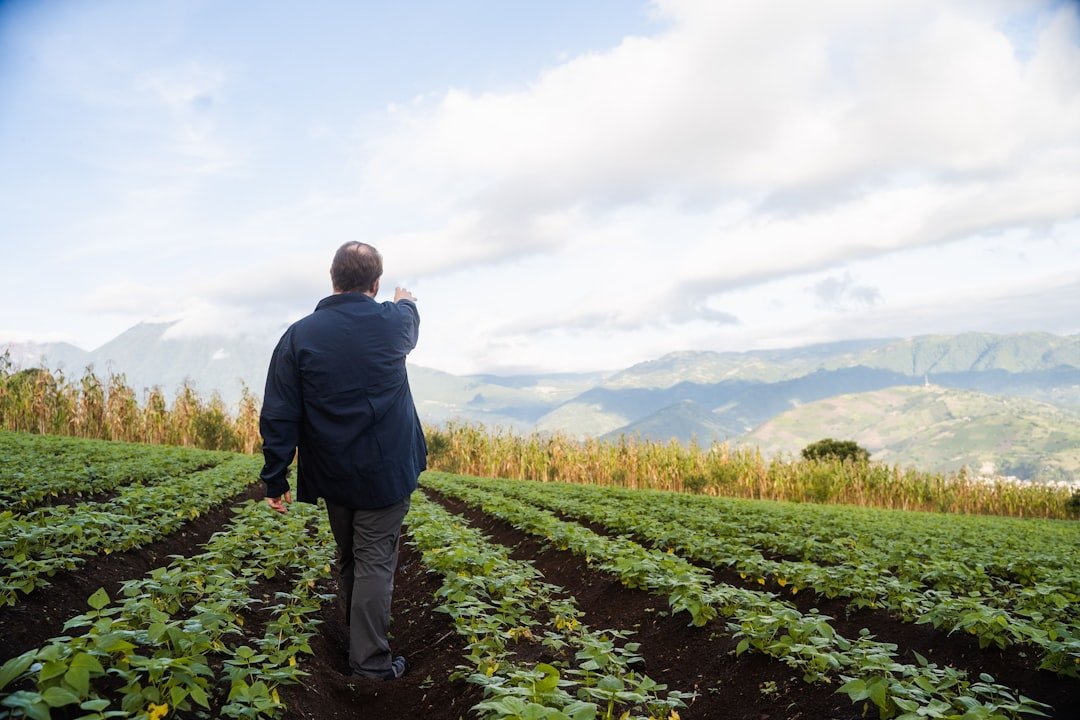
Managed farmland can generate passive income for urban professionals because you own the land while a professional team plans crops, runs operations, sells produce, and reports performance—similar to how you invest in a mutual fund without personally picking stocks. At SanjeevaniFarms, we structure it so your role stays investor-first: clear ownership, defined revenue-sharing, and transparent farm reporting.
Why Urban Professionals Are Turning to Farmland for Passive Income
For many Bangalore tech professionals, farmland feels like the opposite of city uncertainty: it’s a tangible asset, it can produce real cashflows, and it has lifestyle value you can actually use on weekends. The shift isn’t about “quitting your job to farm.” It’s about owning productive land while specialists manage the work.
A relatable analogy: farmland like an “infrastructure asset” in your portfolio
If your equity SIPs are your growth engine, managed farmland can play the role of a real asset allocation: a base layer that can (a) appreciate as land, and (b) generate periodic farm income. Unlike an apartment that depends on tenants and society rules, farmland cashflow depends on crop planning, execution discipline, and market access—so the operator matters as much as the land.
This is also why most first-time buyers prefer a managed farm model. You don’t need to learn irrigation schedules, pruning cycles, or labour management. You need a clear contract, measurable farm KPIs, and reliable reporting—more like a project review than traditional farming.
If you’re trying to decide whether managed farmland fits your risk profile, our team at SanjeevaniFarms can help you map it against your goals—income, appreciation, or a legacy asset—without hype.
How Farmland Investment Works: From Purchase to Harvest Revenue
A managed farmland investment works in three layers: you buy a registered land parcel, the farm operator executes an agreed crop plan, and you earn from harvest sales (and potentially lease/event/agroforestry income depending on the model). Think of it like owning a server but outsourcing DevOps—ownership is yours, uptime and performance are handled by specialists under an SLA-like structure.
Step 1: The asset (your land) and the paperwork
You should insist on a registered sale deed in your name, clear boundary demarcation, and a documented chain of title checks. Many investors also ask for key due-diligence items such as encumbrance verification, mutation/RTC-related checks (as applicable), and clarity on access road and water source rights. The exact documents vary by location, but the principle is constant: your ownership must be independent of the operator.
Step 2: The operations (where returns are made or lost)
Once the land is set up (fencing, irrigation, soil prep), the operator implements crop selection, planting, intercropping, pest/disease management, harvesting, and sale logistics. In managed farmland, you are paying for execution quality—because the same acre can perform very differently depending on agronomy and discipline.
Step 3: The income timeline (why crop choice matters)
Farmland income is rarely “monthly rent.” It is usually seasonal or milestone-based. Fruit orchards tend to start generating meaningful income after establishment years, while timber species are long-duration with a back-ended payoff. That’s why many managed projects use a portfolio approach on one plot: short-cycle intercrops for early cashflow, fruit trees for mid-term income, and timber/long-rotation species for long-term value.
Crop examples (realistic expectations, not promises)
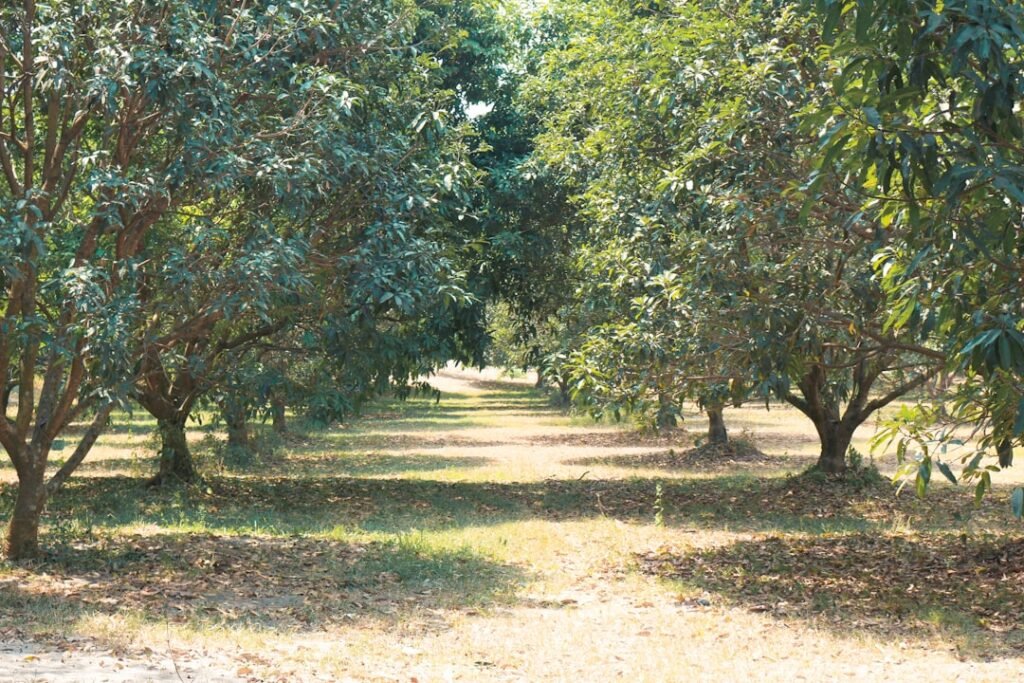
Mango orchards are typically a mid-term asset: trees need time to establish, and commercial yields are usually expected only after a few years. Teak is generally a long-rotation timber play where value is largely realized at harvest. Sandalwood is also long-duration and can involve regulatory compliance at harvest and transit, so it must be planned and documented carefully. The right mix depends on your holding period and your comfort with delayed cashflows.
Real ROI Examples: What 500 Investors Actually Earned from Managed Farmland
Most investors ask for “real ROI numbers,” but in farmland, honest modeling has to separate three things: land appreciation, operating surplus from crops, and fees/costs (management, irrigation power, replanting, security, etc.). Publicly verifiable datasets for “500 investors” across specific managed projects are not consistently available, so the safest way to demystify ROI is to model scenario ranges using crop timelines and cost layers—and then measure actuals against those ranges every season.
Below is a practical ROI modeling table you can use like a spreadsheet template. It shows how cashflows tend to behave across common managed-farm crop strategies, without pretending there is a guaranteed number.
| Strategy (illustrative) | When cashflow typically starts | Cashflow pattern | What drives ROI most | Main risks to model |
|---|---|---|---|---|
| Mango orchard (fruit-focused) | After establishment period (multi-year) | Seasonal annual income; can vary by yield and price | Orchard health, water management, market linkage, post-harvest handling | Weather variability, pests/disease, price volatility, inconsistent harvesting labour |
| Teak (timber-focused) | Primarily at harvest (long rotation) | Back-ended value realization; limited interim income unless intercropped | Survival rate, spacing, thinning/rotation plan, quality of timber | Long holding period, storm damage/fire risk, market cycle at harvest time |
| Sandalwood (long-duration tree crop) | Primarily at harvest (long rotation) | Back-ended; requires compliance planning | Plant health, host species management (where applicable), legal compliance | Long holding period, regulatory/transit compliance at harvest, biological risk |
| Mixed agroforestry (mango + timber + intercrops) | Intercrops can start earlier; trees mature later | Earlier smaller cashflows + later larger payoff | Design quality (right species mix), farm execution consistency | Operational complexity; weak management can reduce both early and late returns |
| Lease model (lease to farmer/operator) | As per lease schedule | More predictable cashflow; upside capped compared to profit-share | Tenant quality, contract clarity, enforcement | Counterparty risk; lease renewals; land misuse without monitoring |
How to read ROI the way an engineer would
Instead of asking “what return will I get,” ask: what are the assumptions (tree survival %, yield per tree, harvest recovery, sale price, cost inflation), what is the reporting frequency, and what are the operational controls? In software terms, you want versioned plans and measurable outputs: plantation maps, survival audits, farm logs, harvest records, and sale ledgers.
Farmland vs Traditional Investments: Portfolio Diversification Analysis

Farmland can diversify a portfolio because its return drivers are different from pure financial assets: it combines land value with biological production. But it is not a replacement for liquid instruments like mutual funds. A better framing is: mutual funds for liquidity and scalable compounding, rental property for semi-stable income (with tenant/maintenance work), and managed farmland for real-asset diversification with seasonal income and longer holding periods.
Managed farmland vs mutual funds
Mutual funds are highly liquid, tightly regulated products with daily NAV visibility. Farmland is illiquid and operationally dependent. The tradeoff is that farmland can give you a tangible asset and an inflation-sensitive production component. For a Bangalore professional, the key is allocation sizing: treat farmland as a long-term sleeve, not as an emergency fund or a short-term speculation.
Managed farmland vs rental property
Rental properties can feel passive, but many owners experience “tenant + maintenance” as a second job. Managed farmland shifts the day-to-day burden to the operator, but introduces agri execution risk and seasonal cashflow timing. In both cases, your real risk is governance: the strength of contracts, reporting, and accountability when things don’t go to plan.
A simple diversification checklist
If you already have equity exposure (SIPs/RSUs/ESOPs) and a home loan, farmland can reduce “single-city, single-asset” concentration. But if you’re early in your career and need liquidity, it’s better to start small or wait until you can hold long-term comfortably.
Legal Ownership Essentials: What You Actually Own and How It’s Protected

The most important rule in farmland investing is simple: you must own the land directly, with documentation that stands even if the management company disappears tomorrow. Managed farmland should be a service layer on top of your ownership—not a substitute for it. If the paperwork is unclear, the “ROI discussion” is meaningless.
What “clear ownership” should look like
At a minimum, you should have a registered sale deed in your name and clarity on boundaries and access. You should also understand what is common infrastructure (roads, borewells, drip lines) versus what is inside your plot, and how maintenance decisions are made. For NRIs, clarity on power of attorney workflows and remote document handling is equally critical.
Compliance realities for tree crops
High-value tree crops can come with compliance steps at harvest and transport. That does not make them “bad investments,” but it makes documentation and process discipline non-negotiable. If a provider is vague about compliance, treat it as a red flag.
To explore ownership and documentation basics before you visit a site, you can also read our resource on buying agricultural land in Karnataka from our blog library: SanjeevaniFarms blogs.
The Managed Farm Model: How You Earn Without Touching a Tractor
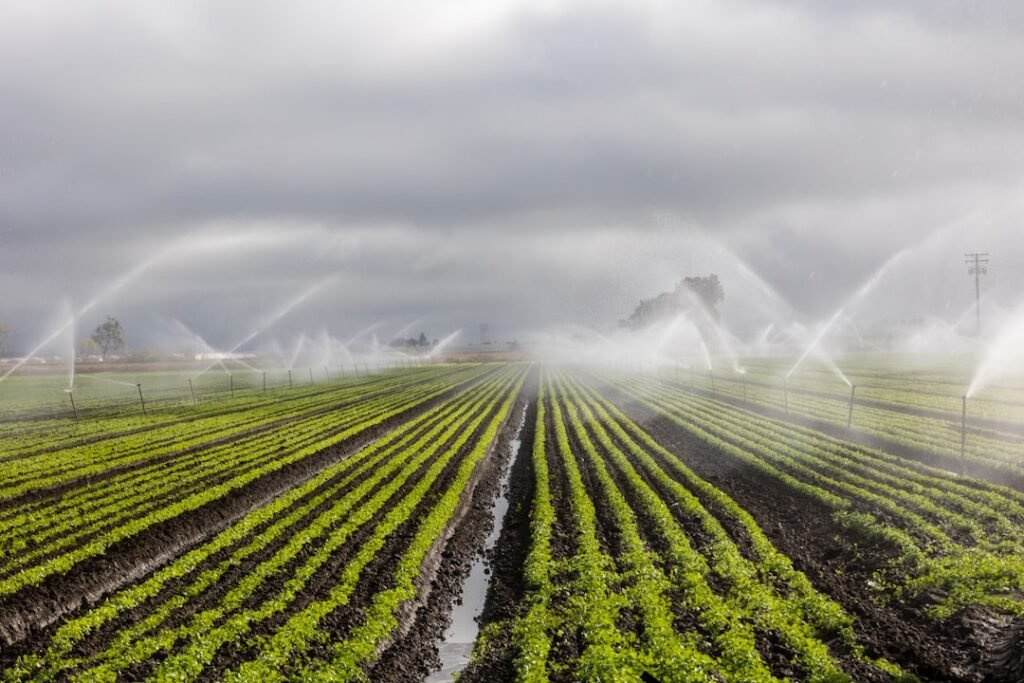
You earn passively when the operator turns your land into a productive unit and shares revenue (or pays lease rent) based on a documented arrangement. The “managed” part is not a marketing word—it should be a system: crop plans, schedules, input records, third-party procurement where possible, and periodic updates with photos/videos so you can monitor progress remotely.
What accountability should include (practical, measurable)
Ask for monthly or seasonal reporting, survival counts for plantations, irrigation and nutrient schedules, harvest logs, and a clear method for calculating your share (gross vs net, and what costs are deducted). In a strong managed model, the operator’s incentives should align with long-term farm health, not just plot sales.
Why mixed cropping is common in managed projects
A single-crop approach can create “lumpy” income and concentrated biological risk. Many managed plots therefore combine a mid-term orchard like mango with longer-duration timber such as teak, sometimes with short-cycle intercrops in the early years. This can smooth income expectations and keep the soil ecosystem productive while trees establish.
If you want a hands-off income plan that still fits a realistic risk framework, our team at SanjeevaniFarms can help you choose a crop strategy based on holding period, water profile, and your need for interim cashflows.
Common Concerns: Liquidity, Exit Options & What Happens If You Want to Sell
Liquidity is the biggest gap between farmland and city real estate or mutual funds. You should enter farmland with a long-term horizon and a pre-thought exit plan. The best managed projects make exits easier by maintaining clean documentation, enforcing consistent site standards, and supporting resale through a verified buyer pipeline—but you should still assume the sale may take time.
Practical exit pathways
Most exits happen through resale to another end-user (lifestyle buyer) or investor (someone seeking land + plantation maturity). A third pathway is family legacy holding, where returns are treated as a mix of periodic produce income and long-term asset value. Before you invest, ask what resale support exists, what transfer process looks like, and how plantation value is represented to the next buyer.
What if you need money earlier than expected?
If you think you may need to exit in 1–3 years, farmland is usually not the right product. In that situation, keep farmland allocation small, or consider a lease-based structure if available, where your expected cashflows are clearer even if the resale timing is uncertain.
Getting Started: Your First Farmland Investment Checklist
The fastest way to feel confident is to treat your first investment like a due-diligence project, not a weekend impulse buy. Your checklist should cover (1) title and registration clarity, (2) water and access fundamentals, (3) a written crop plan with timelines, (4) an operating model that explains fees and revenue share, and (5) a reporting cadence you can hold the manager accountable to.
A simple first-investment checklist (investor-first)
Confirm: registered sale deed in your name, boundary clarity, approach road, water plan (borewell/canal/rainwater/pond), soil and plantation plan, who sells the produce and how proceeds are tracked, what costs are deducted, what happens if plant survival is low, and what your resale/transfer process is. If any of these answers are unclear, pause and ask for documentation.
Explore Managed Farmland Investment Near Bangalore
If you want to evaluate managed farmland without pressure, SanjeevaniFarms can walk you through expected timelines for mango, teak, and sandalwood-style long-duration crops, and how we design mixed planting to balance interim income with long-term value. Schedule a free farm visit this weekend—no obligation, just honest guidance on which corridor and crop plan fits your goals.
To start the conversation, visit SanjeevaniFarms and request a site visit or a call with our team.
Frequently Asked Questions
Can I earn passive income from farmland without farming myself?
Yes. In a managed farmland model, you own the land while a professional farm team handles planting, maintenance, harvesting, and sales under a defined agreement. Your income comes from lease rent or a revenue/profit share, depending on the structure.
When does income usually start in mango, teak, and sandalwood-style plantations?
Fruit orchards like mango generally need an establishment period of multiple years before meaningful seasonal income. Timber species like teak are typically long-rotation with value mostly realized at harvest. Sandalwood is also long-duration and may require additional compliance planning at harvest and transport.
What documents should I insist on before investing in managed farmland?
At minimum, insist on a registered sale deed in your name, clear boundary demarcation, and a verifiable title-check process. You should also understand access road and water rights, and have a written agreement that defines management scope, fees, revenue sharing, and reporting frequency.
Is managed farmland as liquid as mutual funds or apartments?
No. Farmland is typically illiquid and may take time to sell. Treat it as a long-term allocation, and discuss resale support, transfer process, and likely buyer profile before investing.
How do I evaluate whether a managed farmland operator is trustworthy?
Look for clear ownership structure, transparent contracts, measurable reporting (farm logs, survival audits, harvest records, sales statements), and a defined accountability process if targets are missed. Avoid anyone promising guaranteed returns.


I’ve been meaning to check out bet nacional. I constantly heard about this name. Time to find out whether the buzz is real. Here is the site: bet nacional.
Se você procura um site de apostas que te pague certinho e com odds competitivas, pode ir de Be Nacional que você não se arrepende. be nacional
I always use gachoic1com.com to find ‘gà chọi c1 .com’ info. It’s simple and everything is easy to find. Highly recommended! Here you go: gà chọi c1 .com